
Introduction
Knee pain is one of those sneaky injuries that can start small and, before you know it, turn into a full-on roadblock. Whether you're struggling to get through your daily routine or finding it hard to stay active, knee pain can feel like a constant reminder that something's off. And for so many people, traditional treatments just don't cut it.
That's where StemWave shockwave therapy comes in—paired with physical therapy (PT), this dynamic duo could be the solution you've been looking for to get back to moving freely, pain-free, and stronger than ever.
Knee Pain: The Different Faces of an All-Too-Familiar Struggle
Osteoarthritis (OA) – Wear and Tear
This is the most common type of knee pain, especially as we age. OA happens when the cartilage that cushions the knee joint breaks down, causing friction and inflammation. The result? Pain, stiffness, swelling, and difficulty bending or straightening the knee.
Patellar Tendonitis – The "Jumper's Knee"
This is common in athletes or people who put a lot of strain on their knees through repetitive jumping or squatting motions. The patellar tendon becomes irritated or inflamed, leading to sharp pain just below the kneecap.
Meniscus Tears – The Cushion in Your Knee
The meniscus is the cartilage in your knee that acts as a cushion between the femur and tibia. Meniscus tears happen due to twisting motions or sudden impacts. This injury causes pain, swelling, and a feeling of your knee "locking" or catching as you move.
Ligament Injuries – A Torn ACL or MCL
These injuries often happen during sports or accidents when the knee is twisted, hit, or hyperextended. You might feel a sharp pain followed by swelling and instability. Torn ligaments can make it hard to walk, let alone run, jump, or do any high-impact activities.
Bursitis – Inflamed Fluid Sacs
The bursa are small sacs of fluid that help cushion your joints. When they become inflamed—usually due to repetitive motion or overuse—it can cause pain and swelling in the knee.
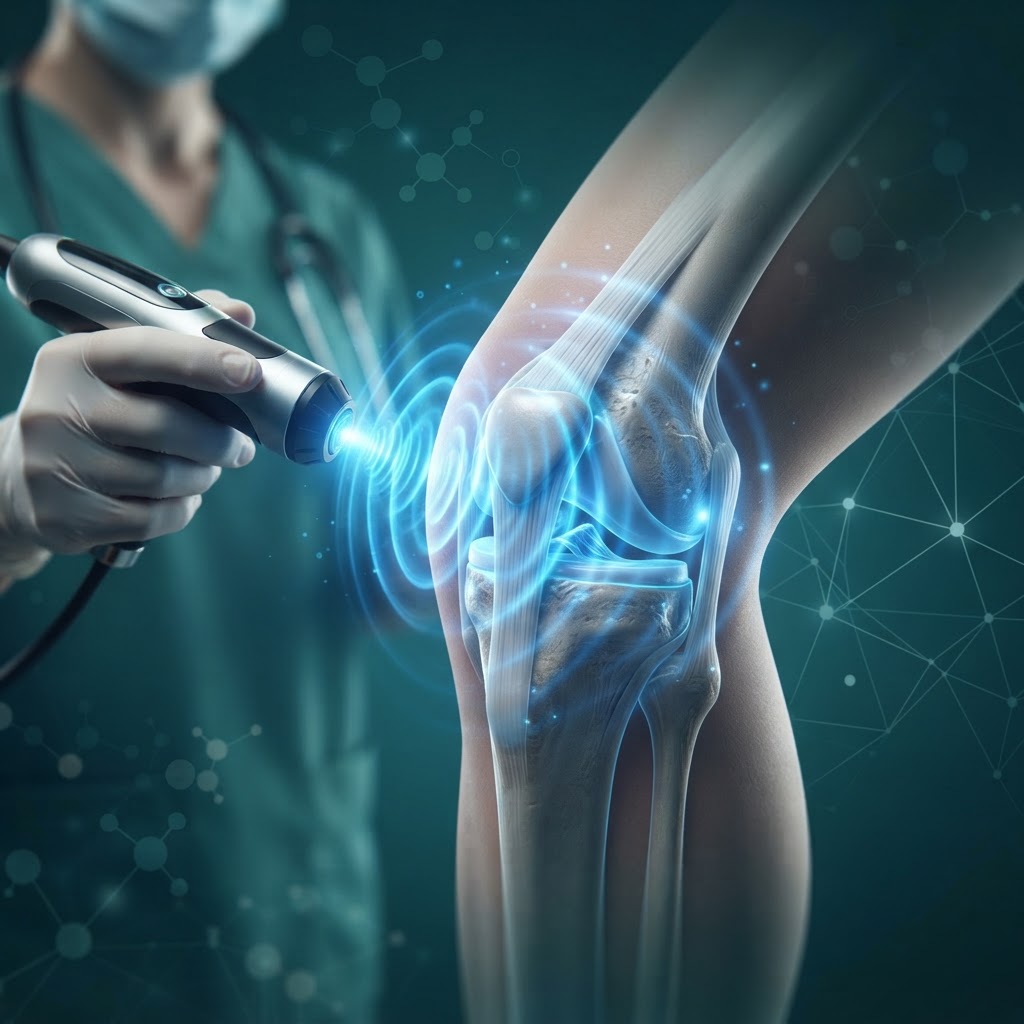
How StemWave Shockwave Therapy Helps Knee Pain
Pain Relief Through Neuromodulation
StemWave therapy helps reduce pain by stimulating the nerves in the knee and blocking the pain signals from reaching the brain. It's like tricking your body into not feeling the pain in the first place, giving you some much-needed relief.
Accelerated Healing
Shockwaves stimulate circulation in the affected tissues, bringing fresh oxygen and nutrients to the injured areas. This can speed up the healing process and help repair tissues that have been damaged, whether it's cartilage, tendons, or ligaments.
Reduced Inflammation
For those struggling with swelling or inflammation in the knee—whether from OA, bursitis, or a torn meniscus—StemWave can help reduce this inflammation, providing relief and improving joint function.
Promoting Collagen Production
Shockwave therapy boosts collagen production, which is key to repairing tendons and ligaments. This is especially important if you're dealing with conditions like patellar tendonitis or a torn meniscus.
Restores Mobility
By improving circulation, reducing inflammation, and speeding up tissue repair, StemWave therapy can help you regain mobility and functionality in your knee.
Pairing StemWave with Physical Therapy: A Winning Combo
Strengthening the Muscles Around Your Knee
PT helps you strengthen the muscles around your knee joint—particularly your quads, hamstrings, and calves. By building muscle strength, you provide better support for the knee, reducing strain and preventing future injuries.
Restoring Range of Motion
Whether you're recovering from a ligament injury or dealing with stiffness from OA, PT helps restore your knee's range of motion through gently stretching and mobilizing the joint.
Pain Management Techniques
PT incorporates pain management techniques like ice, heat, massage, and manual therapy to complement the effects of StemWave.
Prevention of Future Injuries
Your PT will teach you how to move correctly, adjust your posture, and avoid activities that could trigger pain or strain on your knee.
Personalized Care
The combination of StemWave therapy and PT allows for personalized care that targets your specific needs, ensuring the best results.
What to Expect From Your Treatment Plan
Consultation
You'll meet with a specialist to assess your knee pain. They'll talk through your symptoms, lifestyle, and goals to create a personalized treatment plan.
StemWave Sessions
Typically, StemWave therapy sessions last around 15-20 minutes. You may feel mild discomfort as the shockwaves are applied, but most people find the treatment well-tolerated.
Physical Therapy Sessions
Your PT will guide you through targeted exercises that focus on strengthening your knee and restoring mobility.
Results
Many people begin to see improvements after just 3-5 sessions of StemWave therapy combined with PT. You'll experience less pain, better movement, and stronger muscles.
Conclusion: Take Back Your Life, One Step at a Time
Knee pain doesn't have to hold you back. Whether it's from arthritis, an injury, or overuse, StemWave shockwave therapy offers an exciting, non-invasive solution that targets the root cause of your pain and helps your body heal. Pair it with physical therapy, and you've got a comprehensive plan to get your knees stronger, more flexible, and pain-free.
Ready to get back to doing what you love without that nagging knee pain? Don't wait. Talk to a healthcare provider about how StemWave + PT could be the combination you need to move better, feel better, and live your best life!